Mimosa Festival- Celebration Locations and Activities

Flower festivals bring people together to celebrate nature, culture, and the arrival of a new season. Events such as the orange city tulip festival show how flowers can become an important part of local tourism and community life. The mimosa festival follows a similar idea by turning bright yellow mimosa flowers into a lively public celebration.
The name is linked with several events, but major traditional celebrations take place in Mandelieu-La Napoule, France, and Herceg Novi, Montenegro. These events combine flowers with parades, music, local food, exhibitions, and cultural activities.
What Is the Mimosa Festival?
The mimosa festival is a seasonal celebration built around the beautiful yellow mimosa flower. In Europe, these events usually happen in winter when mimosa trees bring bright color to the landscape.
Mandelieu-La Napoule holds one of the best-known celebrations on the French Riviera. Herceg Novi also holds a long-running event that welcomes spring with flowers, music, food, and public entertainment.
| Festival Feature | Details |
|---|---|
| Main flower | Yellow mimosa |
| Main season | Winter and early spring |
| Famous locations | Mandelieu-La Napoule and Herceg Novi |
| Main attractions | Parades, flowers, music and entertainment |
| Cultural value | Celebrates local history and seasonal traditions |
| Visitor appeal | Nature, culture, food and photography |
History of the Mimosa Celebration
Mimosa Festival has an interesting history in southern France. The plant is originally from Australia and became established on the Côte d’Azur after its introduction to the region. Local growers later developed mimosa cultivation into an important winter flower trade.
Official tourism information says mimosa appeared around Cannes by about 1880. Growers then increased across places such as Mandelieu, Tanneron, Pégomas, and La Roquette. Flowers were shipped from local railway stations to other parts of France and Europe.
Mandelieu-La Napoule and Its Famous Flower Festival
Mandelieu-La Napoule is widely promoted as the Mimosa Capital of Europe. The town sits between Mediterranean scenery and the Tanneron hills, where visitors can explore impressive areas of Mimosa Festival.
| Fact | Mandelieu-La Napoule |
|---|---|
| Country | France |
| Region | Côte d’Azur |
| Traditional month | February |
| Flower | Mimosa |
| Main attraction | Flower parade |
| Other activities | Concerts, fireworks and entertainment |
| Nearby natural area | Tanneron Massif |
Why Mimosa Became So Important
Mimosa Festival stands out because its bright yellow flowers appear during the colder part of the year. Its color creates a strong contrast with the blue Mediterranean coast and green hills of southern France.
The flower also became economically useful. Growers cultivated it for cut flowers, while the wider region developed products and visitor experiences connected with its scent and appearance.
Flower Parades and Decorated Floats
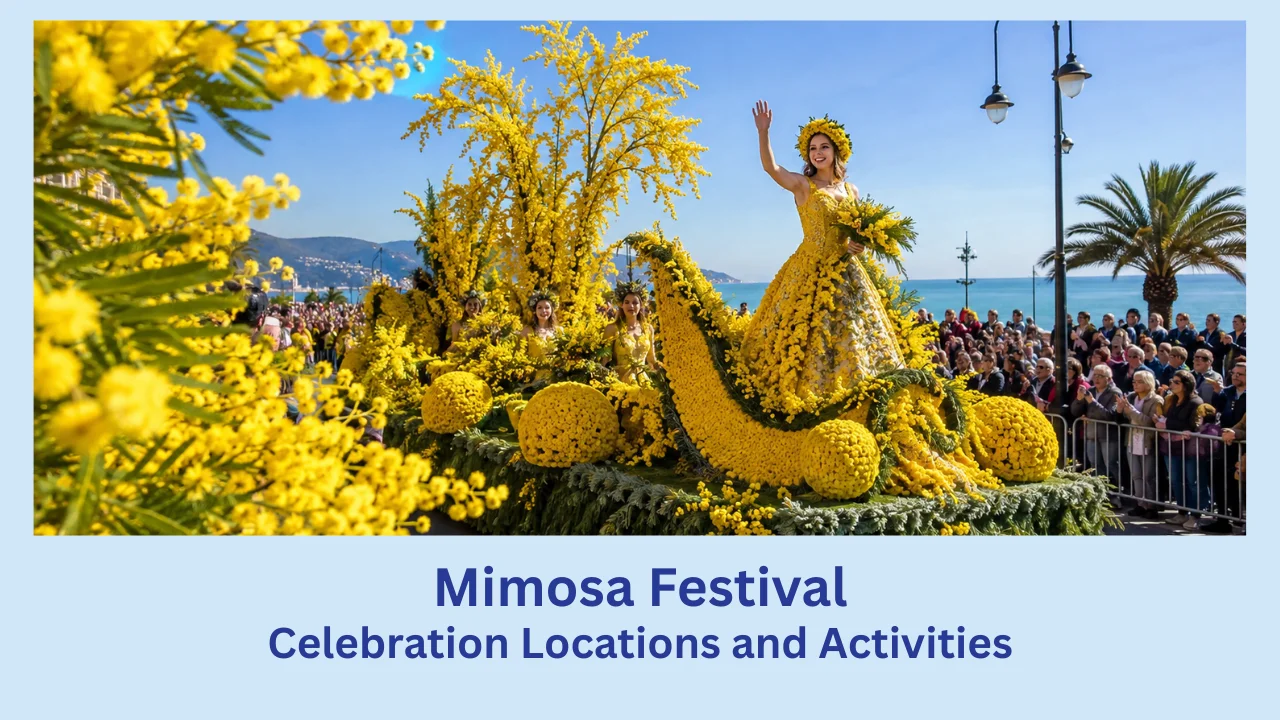
The flower parade is one of the biggest attractions at the mimosa festival in Mandelieu. Large floats decorated with flowers travel through the town while performers and crowds create a carnival atmosphere. The Sunday flower parade takes place along the seafront opposite Château de La Napoule. The wider program reaches different parts of town, including Capitou, the historic district associated with mimosa growers.
These displays require careful preparation because flowers form an important part of the decoration. The golden-yellow mimosa gives the parade a bright and recognizable appearance.
Music, Entertainment and Carnival Activities
| Activity | What Visitors Can Expect |
|---|---|
| Flower parade | Decorated floats and mimosa displays |
| Concerts | Live musical entertainment |
| Carnival | Costumes and festive performances |
| Fireworks | Evening public entertainment |
| Mimosa distribution | Fresh flowers shared during celebrations |
| Children’s events | Family-friendly carnival activities |
Mimosa Festival in Herceg Novi
The mimosa festival is also an important tradition in Herceg Novi, Montenegro. The local celebration was established in 1969 by the Tourism Alliance of Boka Bay and the Herceg Novi Municipality.
The event normally takes place around February and March and offers much more than flower displays. Its program includes carnival parades, costume parties, exhibitions, concerts, sports, and presentations of regional culture.
Mimosa, Fish and Wine Tradition
Food forms an important part of the Herceg Novi celebration. One of its signature events combines mimosa, fish, wine, music, and community gatherings in a relaxed coastal setting.
According to Herceg Fest, the Mimosa, Fish and Wine festivities attract around 20,000 guests each year. The event connects local food traditions with the flower that represents the wider celebration.
International Flower Exhibition
Herceg Novi also hosts an International Flower Exhibition as part of its traditional program. This feature strengthens Mimosa Festival connection with flowers, gardening, nature, and seasonal culture.
Brass orchestras and majorettes also take part in promenade concerts. Exhibitions, literary events, stage programs, and guest performances add more cultural value to the festival.
Mandelieu and Herceg Novi Compared
Both destinations celebrate the same flower, but each place has created its own identity. Mandelieu connects mimosa closely with the French Riviera, flower parades, growers, and winter tourism.
| Feature | Mandelieu-La Napoule | Herceg Novi |
|---|---|---|
| Country | France | Montenegro |
| Main period | February | February/March |
| Main symbol | Mimosa flower | Mimosa flower |
| Famous feature | Flower parade | Fish and wine festivities |
| Other highlights | Fireworks and concerts | Masquerades and brass bands |
| Character | Riviera flower celebration | Tourism and cultural festival |
Exploring the Route du Mimosa
Visitors to southern France can extend their mimosa festival experience by exploring the Route du Mimosa. This tourist route stretches for about 130 km from Bormes-les-Mimosas to Grasse.
The route passes through eight destinations, including Sainte-Maxime, Saint-Raphaël, Mandelieu-La Napoule, Tanneron, and Pégomas. Tourism officials recommend exploring it from January to March, when the winter landscape offers strong mimosa scenery.
The Tanneron Mimosa Landscape
The Tanneron area adds natural beauty to a festival visit. Mandelieu tourism describes the Tanneron Massif as home to the largest mimosa forest in Europe.
Travelers can explore fragrant trails, guided walks, and panoramic roads through the landscape. These activities provide a quieter experience away from busy parades and entertainment.
Local Products and Mimosa Culture
The mimosa flower has influenced more than public celebrations. Mandelieu tourism highlights products such as soap, honey, perfume, decorations, and delicacies linked with the flower.
Visitors can also learn about growers and traditional flower production. These experiences show how one seasonal plant has shaped local tourism, crafts, farming, and cultural identity.
Best Time to Visit
February is usually the key month for the main French celebration. Visitors should check the official program before traveling because exact dates and activities can change each year.
| Travel Consideration | Useful Information |
|---|---|
| Main festival season | February |
| Route du Mimosa season | January to March |
| Good for | Families, couples and photographers |
| Main outdoor sights | Mimosa forests and Mediterranean scenery |
| Busy periods | Major parade days |
| Planning tip | Check the official yearly program |
What Makes the Celebration Special?
The mimosa festival stands apart from many flower events because it brings color to the middle of winter. Yellow flowers, coastal scenery, decorated streets, and music create an atmosphere that feels closer to spring.
It also protects local traditions by introducing visitors to growers, regional food, crafts, music, and history. This mixture of natural beauty and cultural heritage gives the celebration a clear identity.
Tips for Visitors
Visitors should plan accommodation early when traveling during major parade dates. Comfortable shoes are also useful because walking through town and nearby natural areas can become an important part of the experience.
A camera is worth carrying because the yellow flowers create excellent photographs against the Mediterranean landscape. Visitors should also respect flower-growing areas and follow local rules when walking through natural spaces.
Why the Festival Supports Local Tourism
Large seasonal celebrations can encourage people to visit destinations outside the traditional summer season. Mimosa blooms during winter, so towns can attract travelers when many European destinations are quieter.
Hotels, restaurants, shops, growers, performers, and local businesses can benefit from increased visitor activity. The festival therefore works as both a cultural event and a tool for seasonal tourism.
2027 Festival Information
Mandelieu-La Napoule has announced its next major celebration for February 10 to 14, 2027. The program is expected to continue its tradition of parades, entertainment, flower distributions, concerts, and children’s activities.
Travelers planning far ahead should still check official information before booking. Organizers may publish more detailed schedules, ticket information, road changes, and event times closer to the celebration.
Conclusion
The mimosa festival combines nature, local heritage, tourism, and public entertainment in a colorful seasonal event. Mandelieu-La Napoule offers famous flower parades, while Herceg Novi adds food, masquerades, music, and regional traditions.
For travelers, the mimosa festival offers more than a chance to see yellow flowers. It provides a way to experience Mediterranean landscapes, meet local communities, enjoy cultural events, and welcome the approach of spring.