Chicago Blues Festival- Dates Venues Artists and Travel Tips

Music festivals bring people together through live performances, culture, and shared experiences. Events like the mill valley music festival show how live music can create a strong connection between artists and fans. The chicago blues festival offers this experience while celebrating one of America’s most important musical traditions.
Held in Chicago, Illinois, this annual event brings blues music to large outdoor stages and historic locations. Visitors can hear famous musicians, local performers, and rising artists while exploring the roots of Chicago blues.
What Is the Chicago Blues Festival?
The chicago blues festival is an annual event that celebrates blues music and Chicago’s role in its development. The City of Chicago presents the event through its Department of Cultural Affairs and Special Events. The festival is widely known as one of the world’s largest free blues celebrations. Admission to the main programming is free, which allows residents and tourists to enjoy live music without buying a festival pass.
The event features traditional blues, electric blues, soul-blues, and other styles connected with the genre. Different stages allow visitors to discover both established musicians and talented local performers.
Quick Facts About the Festival
| Festival Detail | Information |
|---|---|
| Event | Chicago’s annual blues celebration |
| First annual edition | 1984 |
| Main location | Millennium Park, Chicago |
| Main venue | Jay Pritzker Pavilion |
| Typical season | Early summer |
| Admission | Free for main festival programming |
| Music style | Blues, Chicago blues, soul-blues and related styles |
| Organizer | Chicago Department of Cultural Affairs and Special Events |
| Main purpose | Celebrate and preserve Chicago’s blues heritage |
History of the Chicago Blues Festival
The chicago blues festival officially began as an annual city event in 1984. Its launch came one year after the death of Muddy Waters, one of the most important figures in Chicago blues. The first festival included a major tribute to Waters and celebrated the musicians who shaped the genre. Over time, the event developed into a yearly tradition that attracts blues fans from Chicago and beyond.
The Chicago Blues Festival has welcomed many legendary performers during its long history. These appearances have helped connect older blues traditions with new generations of listeners.
Why Chicago Became the Home of Electric Blues
Chicago’s relationship with blues music developed through migration and cultural change. During the Great Migration, many African Americans moved from the southern United States to northern cities. Musicians brought Southern blues traditions with them as they settled in Chicago. They performed in clubs, bars, neighborhoods, and other venues across the growing city.
Busy urban venues required a louder sound than small rural performances. Musicians began using electric guitars, amplified harmonicas, bass, drums, and stronger sound systems. This new approach helped create the powerful sound known as Chicago blues. The style later influenced rock, soul, R&B, and many other forms of popular music.
Famous Musicians Connected With Chicago Blues
Muddy Waters stands among the most important musicians associated with the city’s blues history. His electric sound helped introduce Chicago blues to listeners around the world. Howlin’ Wolf, Willie Dixon, Little Walter, Koko Taylor, Junior Wells, and Buddy Guy also became major names. Each artist contributed a different voice, sound, or performance style to the tradition.
The festival keeps this musical history visible through performances and special tributes. Younger musicians can also introduce classic blues sounds to audiences who may be hearing them for the first time.
Legendary Festival Performances
The chicago blues festival has hosted an impressive range of performers since its beginning. Famous past artists include B.B. King, Etta James, Buddy Guy, Koko Taylor, Chuck Berry, and Junior Wells. Some performances have become memorable parts of the event’s history. In 1986, Rolling Stones guitarist Keith Richards joined Chuck Berry during Berry’s festival appearance.
These moments show how far the influence of blues reaches beyond its original genre. Rock musicians and other artists have often drawn inspiration from Chicago’s electric blues tradition.
Where Does the Festival Take Place?
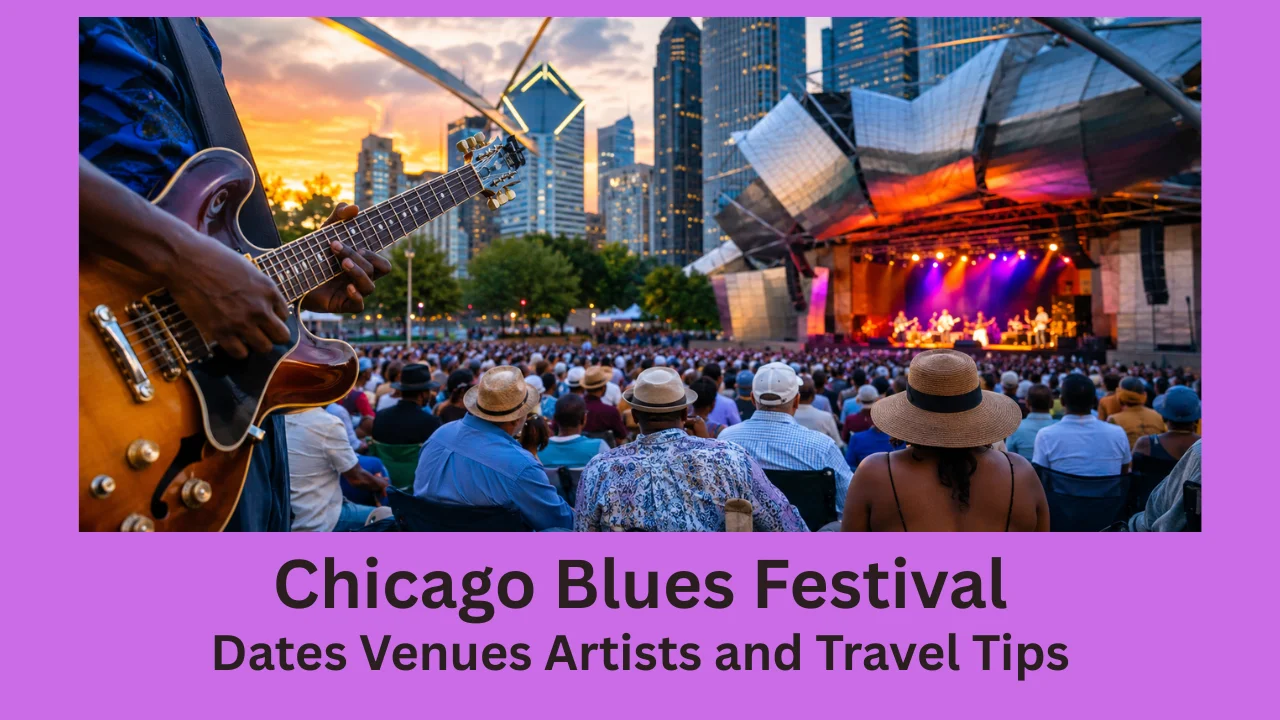
Millennium Park serves as the main home of the modern festival. The park sits in downtown Chicago and provides a large public space for outdoor music events. The Jay Pritzker Pavilion hosts many major performances during the celebration. Additional stages and nearby spaces may feature other artists throughout the festival.
Programming can also reach locations connected with Chicago’s music history. This wider approach allows visitors to experience the music while learning about the city that helped shape it.
The Importance of Maxwell Street
Maxwell Street holds a special place in Chicago blues history. For decades, musicians performed around its busy market area and introduced their music to large crowds. Street performers could experiment with amplified instruments and energetic styles. The area became closely linked with the development and spread of urban blues music.
Modern festival programming has sometimes included Maxwell Street events. These activities connect today’s audiences with a location that played an important role in Chicago’s musical story.
What to Expect at the Festival
A visit to the chicago blues festival is mainly about enjoying live music in an open and welcoming environment. Visitors may hear traditional blues followed by electric, modern, or soul-influenced performances.
Large headline shows often attract the biggest crowds in the evening. Smaller performances can give visitors a closer look at local musicians and less familiar blues styles. The atmosphere usually includes both dedicated blues fans and casual visitors. Families, tourists, music students, and Chicago residents can all experience the event together.
Festival Music and Performances
Blues may sound simple at first, but the genre contains many different styles. Some musicians focus on guitar-driven electric blues, while others highlight harmonica, piano, vocals, or traditional sounds. Chicago blues usually has a strong rhythm and amplified instruments. Performers may also mix blues with soul, funk, gospel, jazz, or rock influences.
This variety keeps the Chicago Blues Festival interesting across several performances. Visitors can hear the historical roots of blues while also discovering how modern artists continue to change it.
Chicago Blues Festival 2026
The chicago blues festival returned from June 4 through June 7, 2026, with events held across several Chicago locations. Programming included Millennium Park, Maxwell Street, and the Ramova Theatre. The 2026 lineup included respected musicians from different generations of blues. Artists included Taj Mahal, Elvin Bishop, Charlie Musselwhite, John Primer, Ronnie Baker Brooks, and Toronzo Cannon.
The Chicago Blues Festival also recognized 55 years of Alligator Records, a Chicago label with a major role in modern blues. The celebration highlighted the connection between record labels, musicians, and the city’s blues culture.
2026 Festival Overview
| Category | 2026 Details |
|---|---|
| Dates | June 4–7, 2026 |
| Main city | Chicago, Illinois |
| Main outdoor venue | Millennium Park |
| Other locations | Maxwell Street and Ramova Theatre |
| Notable artist | Taj Mahal |
| Other performers | Elvin Bishop, Charlie Musselwhite and John Primer |
| Special recognition | 55 years of Alligator Records |
| Main admission | Free festival programming |
Is the Festival Free?
One of the biggest attractions of the event is its accessibility. Main festival programming is generally free, so visitors can enjoy major blues performances without an expensive admission ticket. Free entry also introduces blues music to people who might never attend a paid blues concert. A visitor can arrive out of curiosity and leave with a deeper interest in the genre.
Popular performances can attract large crowds, especially near the main stage. Arriving earlier can make it easier to find a comfortable viewing area.
Cultural Experience Beyond the Music
Chicago Blues Festival visit can also become an opportunity to explore Chicago. Millennium Park places visitors close to architecture, public art, restaurants, museums, and other downtown attractions. Music fans may also explore neighborhoods and venues connected with Chicago’s blues history. Local blues clubs continue to give visitors opportunities to hear live music outside festival hours.
This wider experience helps travelers understand why blues became so closely linked with the city. Chicago is not simply a festival location; it is part of the story behind the music.
Conclusion
The chicago blues festival combines free entertainment with history, culture, and world-class musical performances. Its roots reach back to Chicago’s transformation of Southern blues into a powerful electric style.
From Muddy Waters and Buddy Guy to today’s performers, the event connects several generations of blues music. For visitors, it offers an accessible way to enjoy live performances while learning why Chicago remains one of the world’s most important blues cities.