Greek Food Festival- Authentic Flavors and Heritage

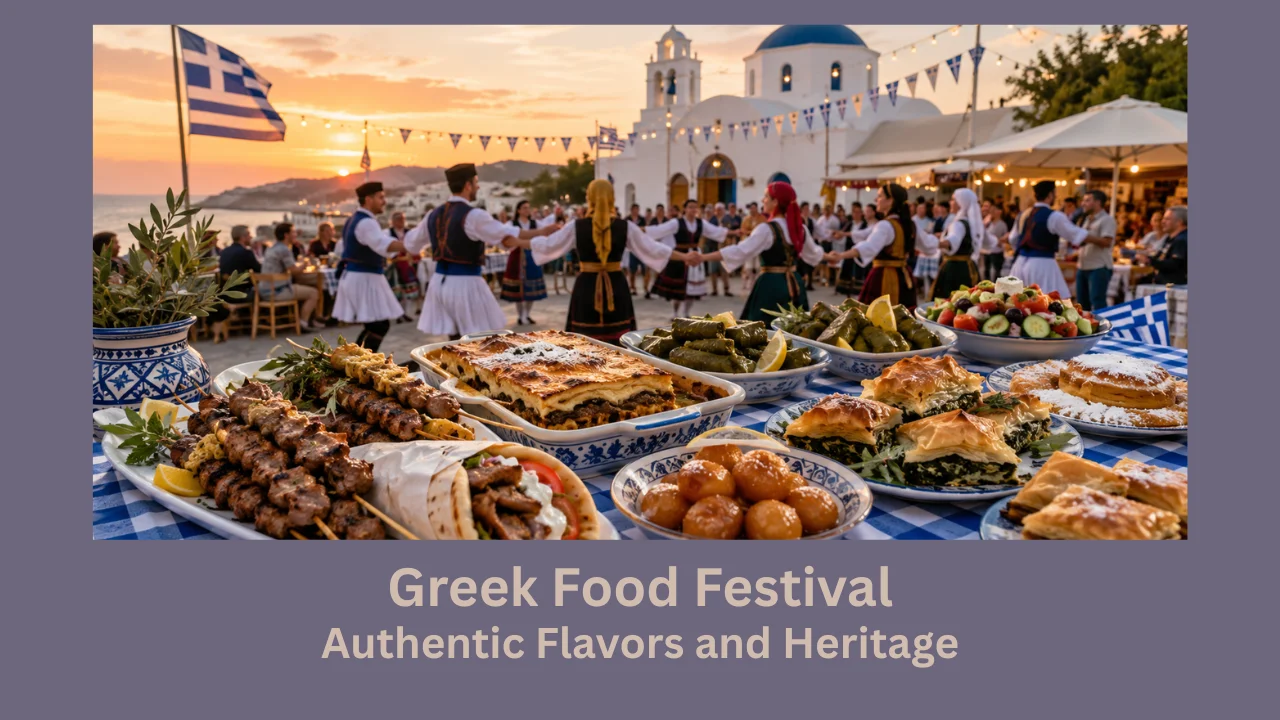
A Greek food festival brings the flavors, music, dance, and traditions of Greece together in one lively event. Like the fort worth water lantern festival, it creates a shared space where families can enjoy culture and community.
These festivals take place in many cities, especially where active Greek communities have built strong cultural roots. Visitors can taste traditional meals, watch folk dancers, hear Greek music, and learn about Greek heritage.
What Is a Greek Food Festival?
A Greek food festival is a public celebration that introduces visitors to Greek cuisine and cultural traditions. Greek Orthodox churches and community groups organize many of these events for both Greeks and non-Greeks. Food often takes center stage, but the experience goes far beyond a meal. Music, dance, church tours, markets, and family activities can turn the event into a full cultural celebration.
Many festivals also help communities raise funds for churches, charities, scholarships, and local programs. This mix of food and community service gives these celebrations a deeper purpose.
Quick Overview of Greek Food Festivals
| Feature | What Visitors Can Expect |
|---|---|
| Main attraction | Traditional Greek food and desserts |
| Popular foods | Gyros, souvlaki, spanakopita and pastitsio |
| Popular sweets | Baklava and loukoumades |
| Entertainment | Live music and traditional Greek dancing |
| Cultural activities | Church tours, exhibits and markets |
| Organizers | Often Greek Orthodox churches and communities |
| Audience | Families, tourists and the general public |
| Purpose | Culture, community, fundraising and entertainment |
History Behind Greek Food Festivals
Greek festivals have strong links to community life, religion, food, and celebrations in Greece. Traditional Greek panigyria often connect religious feast days with meals, music, markets, and dancing. Greek communities carried these traditions with them when families moved to other countries. Local churches later became important centers for preserving language, recipes, faith, music, and customs.
Some American festivals have existed for decades. Richmond’s Greek cultural and food festival began in 1976 as a small two-day fundraiser before growing into a much larger event. The International Greek Food Festival in Little Rock began in 1984. Its organizers report that it has donated more than $1.5 million to over 30 charities since its beginning.
Traditional Greek Food Takes Center Stage
The main reason many people attend a Greek food festival is simple: they want to eat. Visitors can discover dishes that reflect family recipes and different parts of Greek cooking. Festival kitchens often prepare large amounts of food for busy crowds. In some communities, volunteers use recipes that families have passed from one generation to another.
Olive oil, herbs, vegetables, cheese, meat, filo pastry, lemon, and yogurt appear in many dishes. These ingredients create flavors that can be fresh, rich, savory, or sweet.
Popular Foods You May Find
| Greek Food | Simple Description |
|---|---|
| Gyro | Seasoned meat served inside warm pita |
| Souvlaki | Grilled pieces of seasoned meat |
| Spanakopita | Filo pastry filled with spinach and feta |
| Pastitsio | Baked pasta with seasoned meat and creamy topping |
| Dolmades | Grape leaves filled with a seasoned mixture |
| Moussaka | Layered dish often made with eggplant and meat |
| Greek Salad | Vegetables, olives and feta cheese |
| Tzatziki | Yogurt sauce made with cucumber and seasonings |
Greek Desserts and Pastries
Dessert is another major part of the Greek food festival experience. Greek pastries often combine nuts, filo, butter, honey, syrup, spices, or soft dough.
| Dessert | Main Features |
|---|---|
| Baklava | Filo, nuts, spices and sweet syrup |
| Loukoumades | Fried dough with honey or syrup |
| Kourabiedes | Rich Greek cookies |
| Galaktoboureko | Custard baked between layers of filo |
| Koulourakia | Traditional Greek butter cookies |
| Melomakarona | Sweet cookies commonly linked with holiday traditions |
Greek Music and Traditional Dancing
Greek music creates much of the energy at these festivals. Live bands may perform while dancers wear traditional clothing and demonstrate dances linked with Greek culture. Some events also invite guests to join the dancing. This approach makes the celebration interactive rather than leaving visitors to simply watch from their seats.
Children and young adults from Greek communities often take part in dance groups. Their performances help younger generations learn traditions while sharing them with a wider audience.
Greek Orthodox Heritage and Church Tours
Many American festivals take place on the grounds of Greek Orthodox churches. The church may therefore become an important part of the cultural experience. Visitors can sometimes join guided tours and learn about Orthodox Christianity, religious art, and architecture. Some churches also explain the meaning of icons and important parts of their worship tradition.
The International Greek Food Festival in Little Rock, for example, offers tours of its sanctuary. Visitors can see Byzantine and Russian iconography while learning about the Orthodox Christian faith.
Shopping at a Greek Marketplace
A Greek food festival may include an agora, a marketplace inspired by the Greek word for a gathering or market space. Vendors can sell gifts, crafts, jewelry, clothing, artwork, and cultural products. The market adds another layer to the festival experience. Visitors can explore Greek-inspired products between meals, performances, and other activities.
Some larger events create several shopping areas. Richmond’s festival grew to include a Greek village shopping area alongside entertainment, food, dancing, and cathedral tours.
Why Greek Communities Hold These Festivals
These celebrations allow Greek communities to preserve traditions while sharing them with others. Food offers an easy and welcoming way to introduce people to another culture. Festivals also bring generations together. Grandparents, parents, teenagers, and children can cook, serve meals, dance, organize activities, or welcome visitors.
Fundraising can be equally important. Money may support a church, outreach work, charities, scholarships, or other community projects.
Famous Greek Food Festivals in the United States
Its 75th San Francisco Greek Food Festival is scheduled for September 18–20, 2026. The announced program includes homemade food, desserts, music, folk dancing, and vendors.
| Festival Example | Known For |
|---|---|
| San Francisco | Long history, food, music and folk dance |
| Richmond | Food, cathedral tours, dance and marketplace |
| Little Rock | Food, community service and charity support |
| Dallas | Greek cuisine and cultural celebration |
| Houston | Food, dancing, music and cathedral activities |
What Makes the Experience Special?
A Greek food festival lets visitors experience several parts of Greek life in one place. They can move from a plate of food to a dance performance and then explore a cultural exhibit. Hospitality also plays a major role in these events. Organizers often want guests to feel welcome even when they have no Greek background or connection to the church.
The result is an event that feels both educational and entertaining. Children can discover another culture while adults enjoy food, performances, shopping, and social activities.
Family Activities and Entertainment
Many festivals welcome families and offer activities beyond dining. Depending on the event, children may find games, special activity areas, performances, or other entertainment. Families can also use the festival as an informal cultural lesson. Children can see traditional costumes, hear another style of music, and taste foods they may not eat at home.
Activities vary greatly between festivals. Visitors should always review the current event program before making plans.
Best Time to Visit
There is no single season for every Greek celebration. Dates depend on the city, church, climate, religious calendar, and local event schedule. Some festivals last only one or two days, while larger celebrations may continue through an entire weekend. Popular meal periods can attract large crowds.
Arriving early can make it easier to explore food stands and cultural areas. Visitors should check official information for parking, admission, accessibility, and event hours.
How These Festivals Preserve Greek Culture
A Greek food festival helps keep cultural knowledge alive outside Greece. Recipes, music, dance, religious traditions, and hospitality can pass from older generations to younger people. Preparing traditional dishes together also creates a direct connection between family history and modern community life. A recipe becomes more than food when it carries memories of parents, grandparents, or earlier generations.
At the same time, festivals introduce these traditions to people from other backgrounds. That cultural exchange can create greater understanding while giving local communities an enjoyable annual event.
Conclusion
Greek festivals show how food can connect people across cultures and generations. Traditional dishes provide the starting point, while music, dance, markets, and church tours complete the experience.
For visitors, the event offers an easy way to explore Greek heritage without traveling to Greece. For organizers, it provides a meaningful way to preserve traditions, welcome neighbors, and support the community.